
Welcome to I Like Illinois
- Details

Miles Davis was an American jazz trumpeter, bandleader and composer. He is one of the most influential figures in the history of jazz and 20th-century music and was born right here in Illinois.
Miles Dewey Davis III was born May 26, 1926 in Alton and was raised in East. St. Louis.
Davis started out on the trumpet when he was 12, inspired by St. Louis’ creative atmosphere.
In 1944, Davis went to New York to study at Julliard, where he started performing with some of the most well-known jazz musicians of all time.
In 1957, Davis had his first major release, called Birth of the Cool. This led him to international recognition. He recorded and toured with his newly formed quintet, and then released Kind of Blue in 1959, which is one of the most successful jazz albums in history.
Throughout the 60s and 70s, Davis released almost 20 albums, blending and transcending musical genres.
Davis took a hiatus from recording and performing from 1975 to 1981. After his hiatus, he created two major albums, Tutu and Aura.
Throughout his career, Davis won eight Grammy Awards, and received 32 nominations.
Miles Davis’ legacy has certainly had an impact on Illinois, and his music is still appreciated by many today.
- Details

“Gilmore Girls,” a very popular comedy-drama television show, premiered 23 years ago, on Oct. 5, 2000.
But, did you know that Melissa McCarthy, who plays Sookie St. James in the show, is from Plainfield, Illinois?
McCarthy was born on Aug. 26, 1970, in Plainfield. She was raised on a corn and soybean farm in a large Catholic family. She graduated from St. Francis Academy, now Joliet Catholic Academy. She also attended Southern Illinois University in Carbondale.
McCarthy began her performing career as a stand-up comedian in New York City. She worked on her acting skills at the Actors Studio, and appeared in stage productions. Later, McCarthy moved to Los Angeles. But McCarthy’s big break came when she was cast as Sookie St. James, Lorelai Gilmore’s best friend in the show “Gilmore Girls.”
McCarthy’s success on “Gilmore Girls” may be her claim to fame, but her most notable role is the character Megan in the 2011 film “Bridesmaids.”
McCarthy has received several nominations and awards for her roles in the CBS sitcom “Mike & Molly” and “Bridesmaids.”
- Details
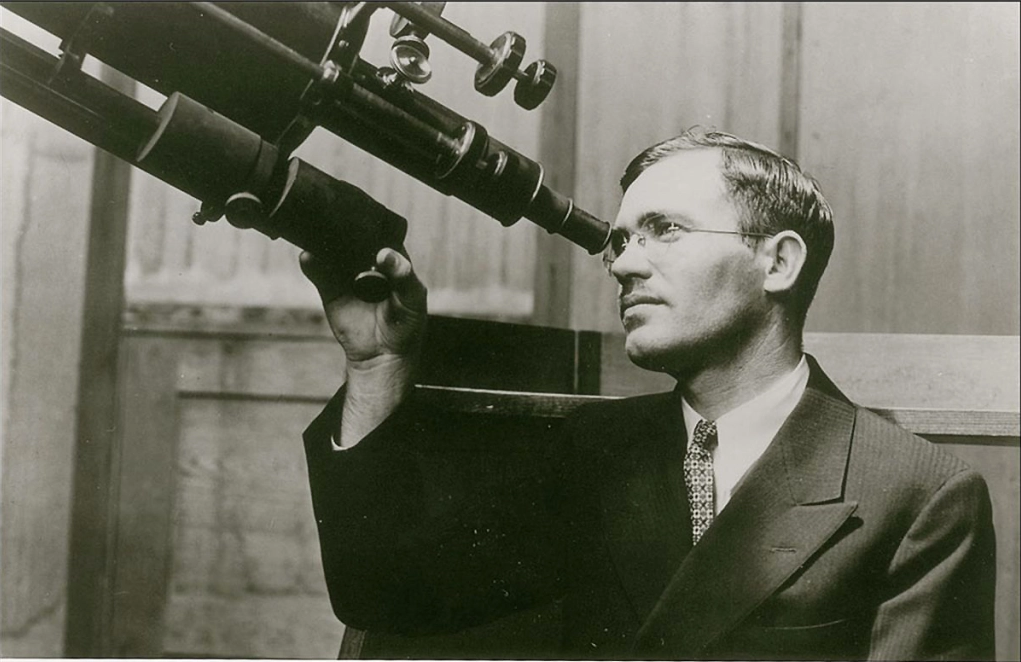
Is Pluto a planet? While this question garners much debate, there’s one fact people agree on: The solar system’s most famous dwarf planet was discovered by Illinois’ own Clyde Tombaugh of Streator.
Tombaugh was born Feb. 4, 1906 on his grandparents’ farmhouse on the northwest side of Streator and attended Heenanville Grade School and Streator High School. After schoolwork and helping his father on the farm, Tombaugh spent the evenings with his eyes to the sky. His uncle’s small handmade telescope helped launch his interest in outer space.
In 1922, Tombaugh’s family moved from Streator to Kansas. Around the age of 20, he began to build his own homemade telescopes using old farm equipment. One such telescope — measuring 24 feet long by 8 feet wide — allowed Tombaugh to make detailed drawings of Mars and Jupiter. He sent these drawings to Lowell Observatory in Flagstaff, Arizona, which hired him in 1929.
- Details
 Senator Carol Moseley-Braun has had numerous firsts in her career. A Chicago native, she was born on August 16, 1947 and has been driven to make big changes since her childhood. Her first interest in politics began after her fight to preserve a habitat for the bobolink, a native Illinois bird, in Chicago’s Jackson Park. From there, she knew she wanted to work more intimately with environmental issues and sustainability.
Moseley-Braun’s first step was receiving her bachelor’s degree in political science from the University of Illinois in 1969. Shortly after, she received her Juris Doctor at the University of Chicago Law School in 1972. After graduation, she went on to be a prosecutor in the office of the U.S. Attorney in Chicago from 1973 to 1977, then served in the Illinois House of Representatives from 1979 to 1989. Her impressive groundbreaking firsts began with her next role: Recorder of Deeds in Cook County – becoming the first Black person to hold an executive position in that county.
Her accomplishments only went higher, as after four years of being Recorder of the Deeds she went on for a successful bid for the U.S. Senate. In 1993, Moseley-Braun became the first Black woman to serve in the U.S. Senate, as well as being the first female Senator from Illinois. In addition, she was also the first woman to serve on the Senate Finance Committee. Her leadership has opened doors for women in public service nationwide. After one term as a U.S. Senator, she then served as the U.S. ambassador to Samoa (2000-2001) and New Zealand (1999-2001).
Over her tenure as a legislator, she authored legislation to provide federal funds to repair dilapidating public schools, extend credit to farmers, aid in cleaning up polluted industrial sites as well as being a forceful advocate for the expansion towards pension benefits for women in the workplace. Senator Moseley-Braun has worked tirelessly over the decades to speak up for historically underserved communities. After many years in public service, she went on to lead Good Food Organics in 2005, which follows her commitment to public responsibility through a business approach of environmental sustainability and financial profitability. Moseley-Braun also became a visiting professor of political science at Northwestern University in 2016. She has been a beacon for thousands of young women who want to make waves in public service and truly is one glass ceiling breaker.
More Articles …
- Chicago pays tribute to Mahalia Jackson honoring her legacy with new court
- Emmett Till’s impact on the world is still relevant 60 years later
- Sandra Cisneros, a Chicago native, is an internationally recognized writer
- Honoring Ida B. Wells’ advocacy for African Americans
- Maria Cerda - A Latina trailblazer in the midst of Chicago


I LIKE ILLINOIS © Copyright 2025