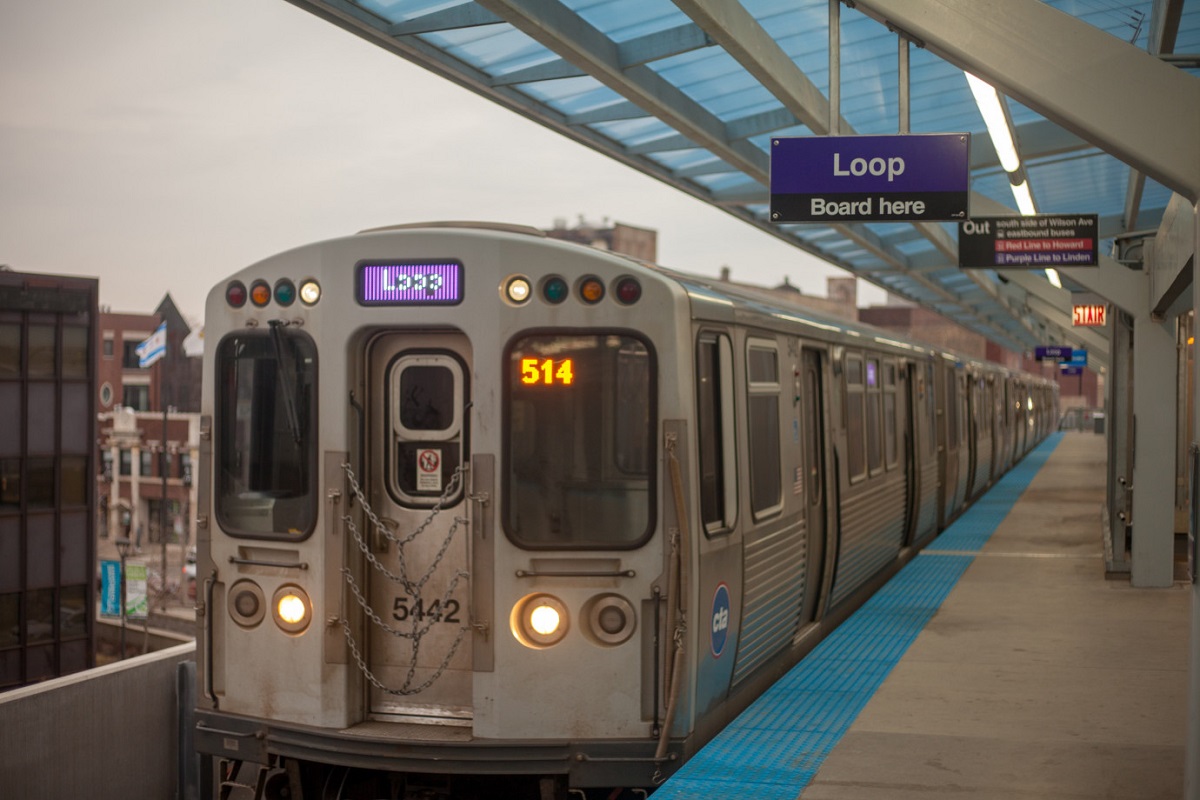
The Chicago ‘L’ has been winding its way through the city’s alleys and rumbling past windows for well more than a century. For many Chicagoans, it’s part of everyday life. But it wasn’t always the system people know today – or even known by the same name.
The first L lines were privately owned and operated as separate companies. In 1892, according to Chicago Transit Authority historian and expert Graham Garfield, who tracks the extensive history of the ‘L,’ the Chicago and South Side Rapid Transit Railroad began operating the first elevated train. A steam locomotive pulled wooden coaches between terminals at Congress Street and what is now Pershing Road. The tracks plotted a 3.6-mile line adjacent to alleys, so it was dubbed the ‘Alley L.’
Before 1897, all the ‘L’ lines stopped just short of downtown. This would change with Charles Tyson Yerkes, a mass-transit mogul who already owned some of the city’s streetcar system. He worked to get permission, sometimes through nefarious means, from landowners downtown to construct the Union Loop. The Yerkes-owned Northwestern ‘L’ added yet another line for Chicagoans in 1900, this time north from the Loop to Wilson Avenue. It was extended multiple times in the decade that followed.
As the automobile became more popular and people left the city for the suburbs, ridership for the rail system declined. In 1947, due to the struggling finances of the separate ‘L,’ bus and streetcar systems, the city and state governments consolidated them into the Chicago Transit Authority commuters know today.
In 1993, CTA rail routes got the colorful new names we know today like the Brown Line, the Red Line, and so on. In the same year, the CTA began operating the Orange Line to Midway Airport. The Pink Line, the CTA’s newest line, opened in June 2006, serving 54th Avenue and Cermak Road.


