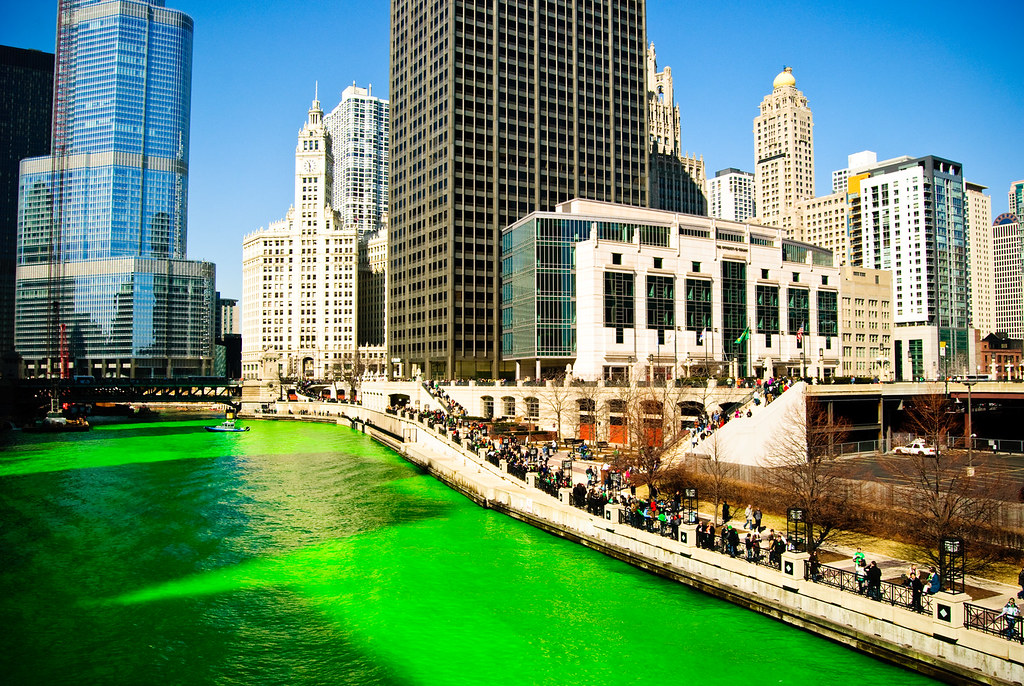
St. Patrick’s Day is a day of parades, parties and celebration in Illinois. You’ve probably seen the green outfits, beverages and river, but do you know the history of the Irish in Illinois? This article will give a brief overview of the Irish legacy in Illinois.
The Irish have taken part in Illinois history since its origins. Irishmen under George Rogers Clark seized the Illinois Country for the United States. Irish served on the State’s first constitutional convention in 1818 and several governors and Chicago mayors trace their ancestry to Ireland.
Due to the infamous potato crop failures starting in 1845 in Ireland, more than a million Irish emigrated out of the country. Foreign born Irish in Chicago peaked at 73,912 in 1900 but large scale immigration continued through the 1980’s.
Those immigrants, proud of their culture, hosted the first St. Patrick’s Day parade in Chicago in 1843 when the city’s population was much smaller. A long hiatus followed though local organizations hosted their own parades, marches and festivities over the years. In 1953, the West Side hosted a major parade, as did Southtown, drawing up to 100,000 attendees. Many other parades were held over the decades, and this year there were four large St. Patrick’s Day parades in the city and parades all across the state.
Today the Irish represent just under 11% of the population in Illinois. In Chicago they make up 8% of the population. Other parts of the state have a higher percentage of Irish, with DuPage County sitting at 13% and McHenry at 15%. Interestingly, the furthest south County, Gallatin, has an 18% proportion of Irish.
Aside from St. Patrick’s Day, the Irish community contributes greatly to the culture, economy and history of Illinois alongside a large tapestry of cultures and ethnicities in the State.


